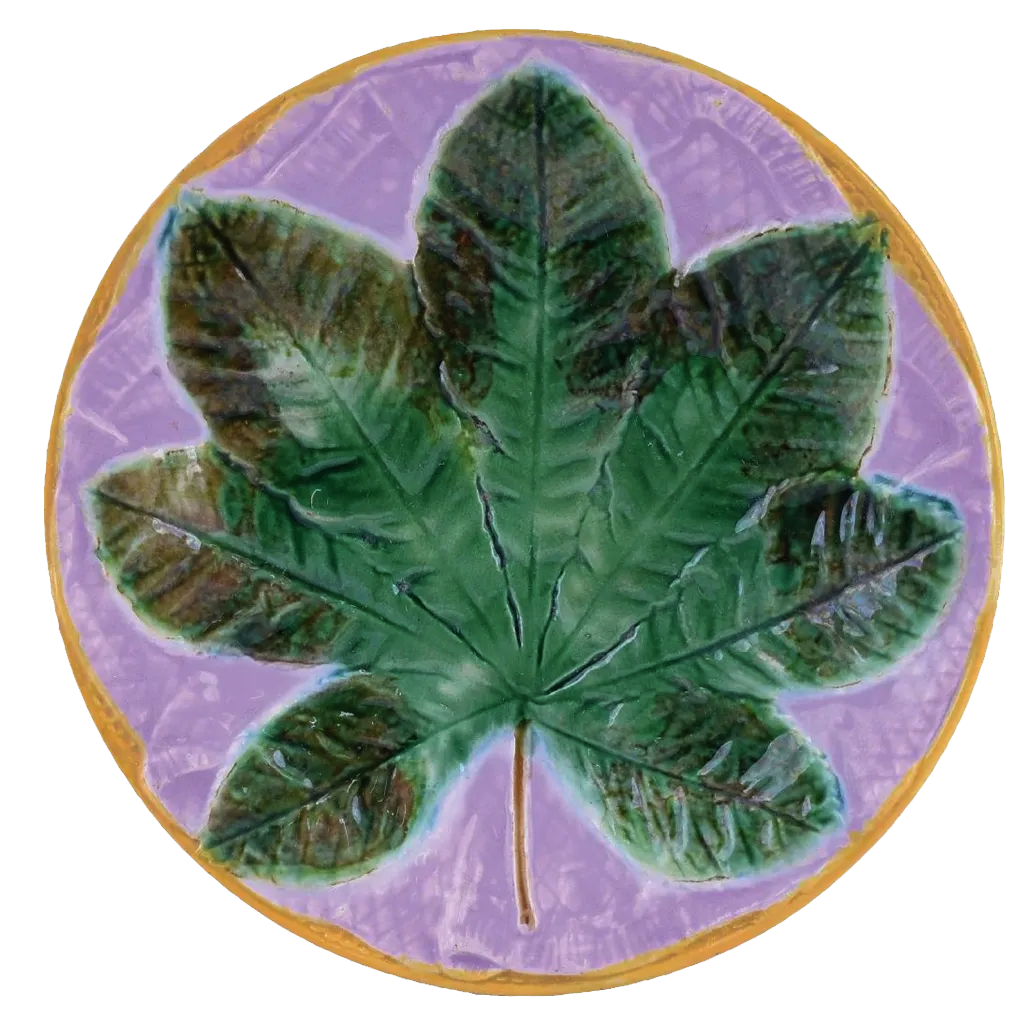
One topic that comes up repeatedly on people's want-to-know list concerning majolica are the marks used by various potters to mark their wares. Those companies that marked their wares, and many of them did, were erratic in sometimes marking pieces and sometimes not marking pieces. This shouldn't come as a surprise when you consider that the production period for many of these wares often covered between 50 to 100 years. Even small potteries like the American Phoenix Pottery that operated over a much shorter period of time were erratic. One company though that was quite fastidious about marking their wares is the inventor of the majolica process, Minton.

Minton majolica 9-well oyster plate

that the plate has a date code that indicates it was made in 1867,
the same year the design was registered

registered by Minton on March 26, 1867.
Minton marked their majolica wares using the word MINTON or, after 1873, MINTONS in capital letters. Although Minton had been marking all their wares since 1796, it wasn't until 1842 that Minton introduced on their earthenwares the series of date cyphers that are we are familiar with on majolica today.


Above is an example of the marks on the reverse of a typical Minton piece. If we check the chart above, the cypher impressed into the body indicates this piece was made in 1881. The impressed S tells us it was potted in September. If the English registration mark were legible it would also give us the day of registration as well. The potter’s mark is not present.
Minton majolica marks are always impressed into the body and always found on the base or underside of the piece. Occasionally a thick glaze will obliterate part of the mark so it may not be read as in the case of the English Registration mark above but it is almost always there. On large pieces the mark can be found on the foot or sometimes even the inside of the piece but considering the consistency the company had in marking its majolica almost all pieces are marked. For more on the English registration system go here.
The method of marking proved so successful that some smaller companies adapted the use of these date code marks for their own pieces. To guarantee that a piece was made by Minton and not another company it is best to look for the impressed MINTON mark in addition to the date code when trying to determine the pedigree of any particular piece.
The method of marking proved so successful that some smaller companies adapted the use of these date code marks for their own pieces. To guarantee that a piece was made by Minton and not another company it is best to look for the impressed MINTON mark in addition to the date code when trying to determine the pedigree of any particular piece.